Tim's Pronunciation Workshop
medium levelTim's Pronunciation Workshop: 'was' and 'were'
Episode 58/ 23 Sep 2014
4.5(5,375 ratings)·6,427 studentsBestseller
Transcript
Note: This is a transcript of a spoken conversation and is not a word-for-word script.
Tim
Hi. I'm Tim and this is my Pronunciation Workshop. Here, I'm going to show you how English is really spoken. Come on, let's go inside. Oh dear, excuse me. I’m a bit tired: I was out late last night, with the lads. I know, yeah, we didn't get back until 9.30. In the evening. It was a wild night. I know, I know, I am a party animal. Anyway, while I get myself together a bit, let's ask some other people in London what they got up to last night.
Voxpops
At
9 o'clock last night I was watching a movie.
I was laying in bed.
I was invited to a dinner at my friend's house.
I was playing football
I was out drinking.
Tim
Well
well, what interesting lives we all lead. Now they all used the past form of the verb 'to be' – was. Now the word was is made of the sounds /w/, /ɔ:/, / z/, isn’t it? Or is it? Listen again. What sound can you actually hear?
Now try this...
Practise your skills with more lessons from Tim's Pronunciation Workshop.
FreeRp109,000100% off
Gratis selamanya · Akses penuh
Go to full courseThis lesson includes:
- Video & audio streaming
- Downloadable PDF
- Full transcript
- Full access — free forever
Takeaways
Podcast
Tim's Pronunciation WorkshopLatest Tim's Pronunciation Workshop
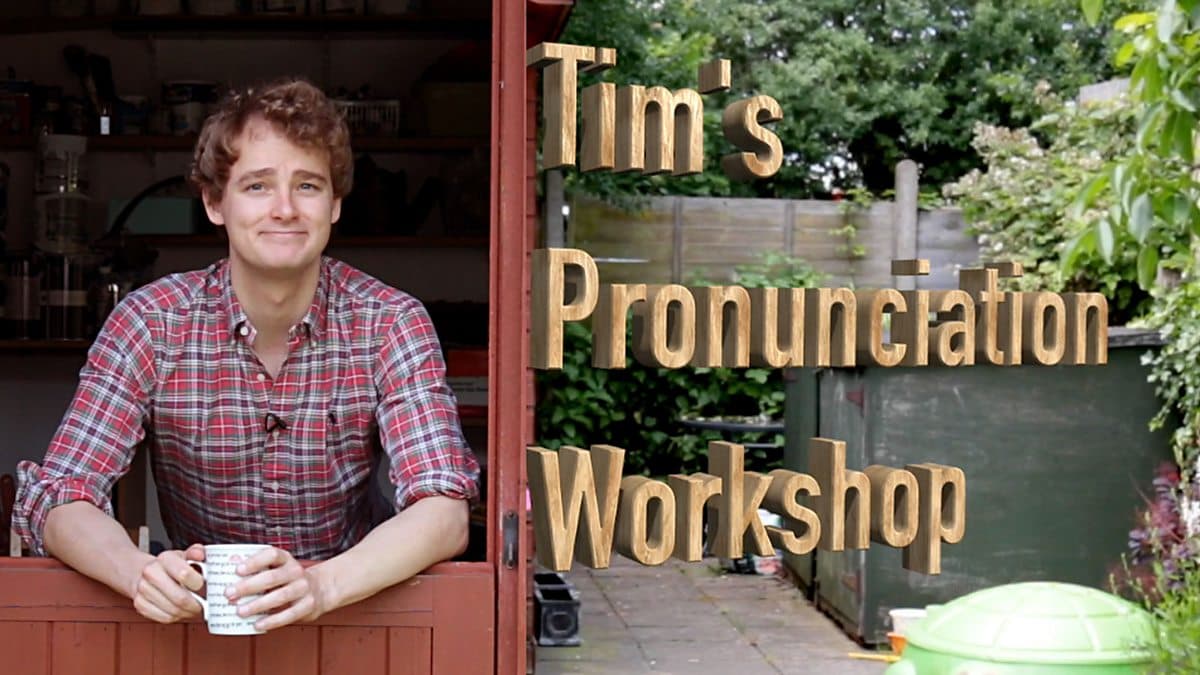
Tim's Pronunciation Workshop: Assimilation of /t/ and /p/
Episode 46 / 23 Sep 2014
Tim talks pronunication: words that end with a /t/ sound
4.5(27,965)FreeRp169,000Bestseller
Tim's Pronunciation Workshop: Linking /r/
Episode 47 / 23 Sep 2014
Tim is looking at an aspect of connected speech called linking /r/.
4.3(24,193)FreeRp209,000
Tim's Pronunciation Workshop: 'Twinning' or Gemination
Episode 48 / 23 Sep 2014
What happens when one word ends in an /s/ sound and the next word begins with an /s/ sound?
4.0(24,610)FreeRp219,000Bestseller
Tim's Pronunciation Workshop: Elision of /t/
Episode 49 / 23 Sep 2014
What happens in everyday speech when a /t/ sound comes in between two consonant sounds?
4.0(24,270)FreeRp179,000Bestseller
Tim's Pronunciation Workshop: Intrusive /r/
Episode 50 / 23 Sep 2014
Tim's talking about sounds that you can hear, even when they don't - or shouldn't - exist!
4.4(24,484)FreeRp159,000
Tim's Pronunciation Workshop: Schwa
Episode 51 / 23 Sep 2014
Tim's looking at an aspect of spoken English called 'schwa'
4.4(20,764)FreeRp239,000

Tim's Pronunciation Workshop: Linking /w/
Episode 52 / 23 Sep 2014
Tim shows us how to join words together in spoken English with a linking /w/
4.0(2,050)FreeRp139,000Bestseller
Tim's Pronunciation Workshop: Assimilation of /n/ followed by /p/
Episode 53 / 23 Sep 2014
Tim looks at an aspect of connected speech called assimilation of /n/ followed by /p/.
4.2(4,172)FreeRp159,000
Tim's Pronunciation Workshop: Elision of /d/
Episode 54 / 23 Sep 2014
Tim looks at an aspect of connected speech called 'elision of /d/'.
4.6(7,366)FreeRp179,000
Tim's Pronunciation Workshop: Assimilation of /nd/
Episode 55 / 23 Sep 2014
What happens when a word or syllable ending in the sound /nd/ is followed by a word or syllable starting with a consonant sound? Tim explains...
4.4(20,754)FreeRp219,000